

Can you install carpet over tiled floors?

When we think of floors that are commonly covered with carpeting, tiles do not generally feature in those thoughts. Carpets are more typically used to cover floors made of wood or stone than ones with vinyl, laminate or ceramic tiling on them.

That is because people view carpeting as a way of softening hard floor surfaces such as stone or wood, as well as helping to keep heat within a room. None of that means that it is impossible to fit carpets on top of tiled floors, or that there is anything wrong in doing so.

However, if that is what you want there are some factors that you should consider before going ahead.
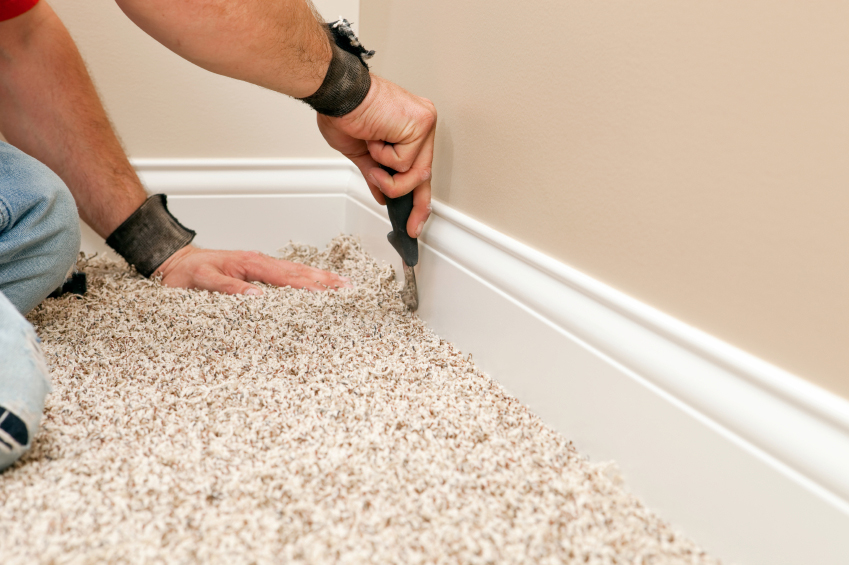
Fitting carpet in a home

Why opt for carpeting?

The first thing to think about is exactly why you want to cover your tiled floor with a carpet.

One good argument for doing so is that you want to give the room a new, revamped look but do not want the trouble and cost of lifting the old flooring. In that situation, there is no denying that choosing an attractive carpet will allow you to revitalise the space quickly and with a minimum amount of expense.

Another good reason for doing it is if you are renting the house or flat and you want the floor to be softer underfoot and warmer. Putting a carpet over the top of the existing tiles will enable you to achieve a warmer floor when you are not allowed to make permanent changes.

If and when you leave the property, the carpet can be lifted and taken with you to use in your new home. If you do rent rather than own the property, you will need to be especially careful not to cause damage to the tiles when putting down the carpet. This will be more difficult to achieve if you are not experienced at fitting floor surfaces.

Carpet tiles

Is any tiling suitable?

In principle, all types of tiling, from stone tiles to luxury vinyl tile (LVT) floors, are fine for putting carpet over. The only issue to be aware of is to do with the condition of the tiles rather than the sort of material they are made of.

It will not be a good idea to lay carpeting over tiles that are either faulty or broken. Look out for cracked tiles on the floor and use a pen to tap them to make sure none emit a hollow sound.

You should also check that none of the tiles on the floor are loose. If there are any issues of this sort, defective tiles should be taken out and the gaps filled in with some sort of cement or other filling material to make the floor level before any carpeting is put down.

The other situation where carpeting on top of tiled floors can be a problem is when the grouting between each tile is very deep and wide. That is most common in parts of the home like patios with sizeable tiles made of terracotta.

How is it done?

Fitting carpet on top of tiling is pretty similar to laying it over a cement floor. The carpet must be stretched across it and the smooth edging should ideally be glued down at the outermost part.

Then the carpet is further held in place by nails hammered into the tile grouting. These nails should go into the lines of grouting that lie closest to the walls on all sides of the room.

However, before the carpet officially gets laid down, it will be necessary to think about the underlay. This should be thick enough to conceal a slightly uneven tiled floor beneath.

Picking a carpet with a high density underlay of around 10mm will provide you the best results. Not only will it smooth out bumps in the floor below, but it will help to conceal the hard feel of the tiles and create a soft, gentle surface to walk on.

That can be particularly important if you live in a part of the country like Chester in the North West, which is prone to cold winters. However, if you want to get a really good finish and avoid lasting damage to the tiles, hiring a carpet fitter to do the job will be more sensible than trying to lay it yourself.

What sort of carpet is suitable?

A reasonably thick carpet will be a lot better than a thin one. The other feature to avoid is tightly looped piles, because these will accentuate any unevenness in the tiling beneath them.

The best carpet to pick will have a twist-style pile that will conceal such slight flaws in the flooring underneath.

In conclusion, you certainly can fit carpet over tiled floors, but it will be best to let a professional handle the job.

Experts say carpets have place in modern homes

Carpets have been featured in homes for centuries to add comfort and colour to rooms. There is, however, a growing trend for hard-surface floor, such as hardwood, vinyl and laminates. While some feel this means there is no longer a place for carpets, many interior design experts disagree.

According to experts, carpets can work with modern-style décor. In a report for Living etc, interior designer Vicente Wolf said:

“I’m a firm believer that spaces, especially bedrooms, should always utilize wall-to-wall carpeting.”

Wolf added that carpets add warmth and cosiness that increase the comfort of a room. Carpets also reduce sound levels.

Darren Jett of JETT Projects is also a fan of carpets, which, to him, add luxury and transforms a room. He believes that carpets remain in style.

Amy Leferink of Interior Impressions recommends carpets in neutral colours to create a soft cosy feel. She says carpets provide a plush atmosphere in intimate spaces such as dens and home libraries.

Some people don't want carpets because they mistakenly think they are difficult to clean and maintain. However, Jett recommends wool carpets that are treated with a sealer to make them stain resistant. Regular vacuuming takes little time and an annual deep clean by a professional carpet cleaner on a decent-quality carpet means that it will last a long time.

There is still a place for carpets in Chester and North Wales homes, but there has been a move away from bright patterns to more muted single colour carpets that suit modern décor styles.

Experts reveal how often carpets need replacing

Consumers considering purchasing carpets for their Chester and North Wales rooms often ask how long a carpet lasts. The answer is dependent on several factors, including the carpet material, the room the carpet is located in and how well it has been looked after. However, two carpet experts have agreed on an estimate of how long the average carpet lasts and have recommended ways to extend the life of a carpet.

In a report for Woman & Home, Scottie Hosie, a Head of Product and Innovation, and Rupert Anton from the Carpet Foundation both say that the average carpet lasts for seven years.

A carpet will function much longer than seven years, but in time it may begin to look worn, and the colours can fade. A condition known as tracking can develop, which Anton explains is:

“When part of the carpet seems to look ‘flat’ in terms of colour and pile and this is because if you walk on the same area every day it will naturally look worn and perhaps a different shade to the rest of the carpet.”

There are several ways the experts recommend to extend the life of a carpet. Regular vacuuming prolongs a carpet’s life by removing grit and dirt. In high-traffic areas, doormats and runners add an extra layer that protects the carpet. Stain blockers and repellent treatments can also help.

Though the average carpet may last seven years, an excellent-quality, well-looked-after carpet can last 20 years or more.

Study finds quarter of Brits don’t clean carpets

A new survey for home technology experts Proscenic found that over a quarter (27%) of people in the UK admit to not cleaning their carpets.

Dirty carpets can hold unseen germs as well as looking unsightly. It is especially important to clean carpets in households with children and pets.

TechRadar’s Home Editor, Jennifer Olsen, has a simple solution for those who are reluctant to clean their carpet – robot vacuum cleaners. These stay on charging bases until activated, then roam around the room cleaning the carpet automatically. They can be timed to clean the room when the house is unoccupied so that no one is disturbed. The only effort required is to remove any large debris, such as toys, books and clothes, from the floor. Of course, a robot vacuum cleaner does not empty itself, so that job still needs doing by hand

If the carpet smells, vacuuming alone may not be sufficient to remove the odour. This is simple to fix by spreading bicarbonate of soda on the carpet, leaving for 15 minutes and then vacuuming.

At least once a year, households should hire a professional carpet cleaner to deep clean their carpets.

Quality carpets in North Wales and Chester rooms have many benefits – they add luxury, have insulating properties to help keep rooms warm, reduce harsh sounds and are long lasting. They do need regular vacuuming, but this only takes a few minutes with a modern vacuum cleaner (or robot cleaner).

Poll reveals popularity of grey carpets

According to a poll by The Underfloor Heating Store, grey carpets are the second most popular floor covering.

Grey is a versatile colour for flooring that can be used in many different décor styles, from traditional to modern boutique chic. There are many ways to use grey carpets to improve the look of a room.

Dark grey carpets and grey walls provide the perfect contrast to neutral-coloured furniture, curtains and rugs. A monochrome colour room can look a little cold, but people can add textures for warmth and cosiness with deep-pile carpets, rugs and hardwood furniture with natural wood grains.

For those who prefer brighter rooms, a dark grey carpet goes well with bold colours, especially coral or shades of orange. A light grey carpet can make smaller rooms appear larger and reflects natural daylight. A grey stripe carpet adds subtle patterns to a room. For a more opulent feel, people can choose an ochre colour sofa and brass fittings.

In a room with grey carpets, experiment with bold wall colours, such as teal-blue or pink to create a vibrant style.

A quality grey carpet will last a long time. If a room needs a makeover, people can change the wall colours, furniture and rugs, but keep the grey carpets.

Grey carpets in Wrexham, North Wales and Chester are often chosen for a traditional subdued room style. They can also form a neutral backdrop in rooms that feature more vibrant colours to make a dramatic, modern style.