
Innovative design trend inspired by the 1970s

There is a trend for interior style inspired by 1970s design that commonly features wall-to-wall deep pile brown carpets.

Many interior designers are creating room decors that resemble luxury avant-garde Italian homes from the 1970s. Tiffany Howell, a Los Angeles based designer, explains the appeal of the seventies look:

“The ’70s brought on the love of lounging. The colours and fabrics created a sense of lushness and plushness.”

Many believe they are living in troubled times post-Covid, with high inflation levels and huge energy bills. People want their homes to be a sanctuary, a place to relax and socialise in. The 1970s look creates the illusion of living in an era with a more carefree attitude to life.

The 1970s was a time when pop culture influenced design which could be garish, bright and outrageous. Tiffany Howell says:

“We live in deeply disturbing times. It’s very understandable that we would look to design styles with outrageous forms.”

The home of designer Marion Maeander features the 1970s look, with stainless steel seatbelt chairs and a sunken living room that has a low sofa and a deep pile carpet, which she often sits on to relax with a drink. She loves the 1970s style for its glamour and chic look.

The 1970s style may not be a top trend in England and Wales, but 1970s type plush texture dark colour carpets in Chester and North Wales homes are a great way to add a touch of plush luxury to a room.

Five reasons to use carpets on stairs

People spend a lot of time on stairs travelling from one level to another. Many home staircases in Chester and North Wales homes are wood, but there are at least five reasons why carpets should be added to stairs.

1. Protection

Stairs are a high footfall area and wood will eventually show signs of wear. Carpet will protect stairs from marks. If you want to preserve the look of the wood grain, use a runner that protects the middle of the stairs but keeps the sides exposed.

2. Safety

Many people injure themselves by falling on stairs. Carpeted stairs are safer than wood. They provide a soft surface that prevents slipping and cushions falls to reduce the risk of serious injuries. Worn stair carpets are not safe and will need replacing.

3. Noise reduction

Firm surface stairs amplify and reflect sound. Stair carpets absorb and dampen sound. If people walking on stairs wakes you up at night, install a soft stair carpet.

4. Style

Stair runners are available in a wide variety of colours and patterns to help you personalise your stairs. A bold pattern carpet adds a vivid visual statement to a staircase.

5. Comfort

Carpet runners feel soft, cosy and more comfortable than bare wood. For maximum comfort, use a thick, soft underlay.

Stair carpets in North Wales homes are quick to fit and are available in different qualities to suit all budgets. Choose a high-quality stair carpet that lasts a long time.

Common mistakes when laying laminate flooring

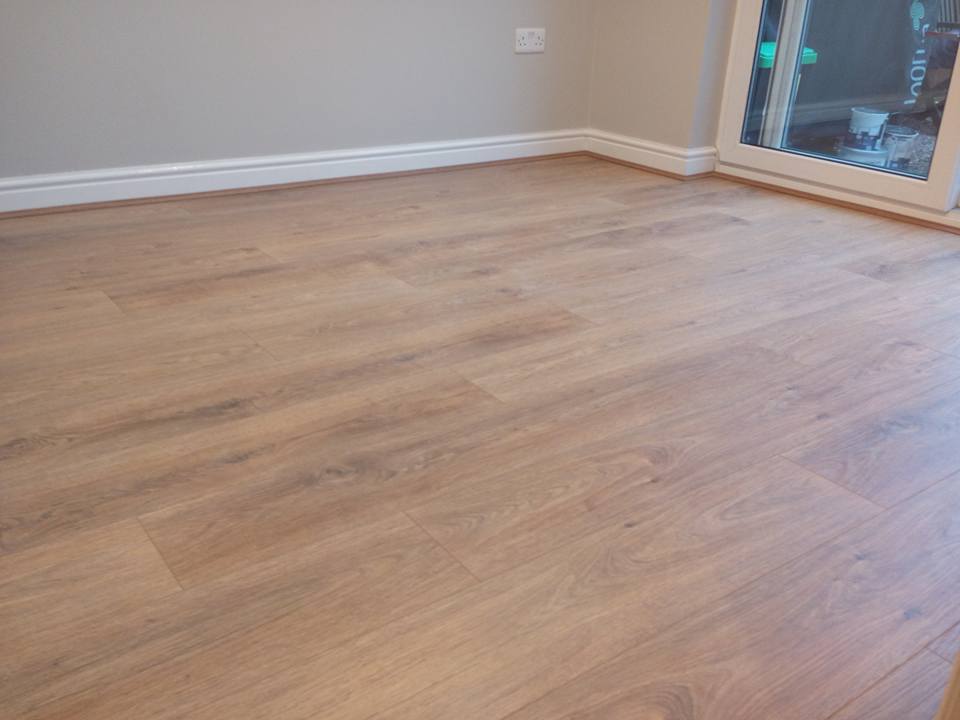
Laminate Flooring

A lot of people like laminate flooring. That is because it is a cost-effective choice for the floors of homes or commercial spaces that is easy to clean and suitable for all types of rooms.

Laminate is a material that offers both flexibility and durability, as well as being quick and relatively simple to install. That does not mean that there are no potential problems that can arise when fitting it though, especially for non-professionals.

These are some of the frequent mistakes people make.

Failing to find out about sealants

It used to be said that laminate was a bad choice for floors in rooms where water is a factor, such as bathrooms. That was because it was prone to bubbles, discolouration and warping when it got wet.

This is no longer such an issue because most laminates now come with a water seal coating already added to the material. However, this is not always the case and failing to enquire about water sealing is a common mistake.

If your choice of laminate floor does not have this built-in sealant, you would need to seal it yourself with something like silicone caulk or glue to prevent the sort of damage mentioned above.

Laminate Flooring at Home

Forgetting to let it acclimate

The majority of laminate floors are made out of either medium density fibreboard (MDF) or high density fibreboard (HDF). These are man-made composite materials that are manufactured using compressed wood fibres.

What this means is that, just as with natural wood floors, the planks need to be allowed to acclimate for approximately 72 hours before they are fitted into place. Non-professionals often forget this or are just not aware of it in the first place.

Allowing planks to acclimate means giving the floor planks the opportunity to adjust to the heat levels inside your house or commercial space. If you fail to do this, the end result can be that they start to buckle or warp out of shape once they have been installed.

Not levelling the floor before installation

Another mistake that people sometimes make is not ensuring that the floor surface is smooth and level before laying the laminate on top of it. Being one of the thinner forms of flooring material, laminate will be unforgiving if the floor is uneven or has bumps or soft areas in it.

The way to avoid this is to check the floor for these imperfections and then sand or grind them out before laying your laminate. Using one of the levelling solutions that are in most shops will help to get rid of any unevenness and allow 1/8 of an inch at the absolute most.

Not putting down an underlay

Laminate floors consist of HDF and MDF planks with the chosen ‘look’ – usually something like marble, tiles or wood – laminated on top of them. However, they are not among the thickest types of flooring material on the market.

That makes them quite vulnerable to damage such as flexing or bending when you walk on them. The way to prevent this is to put an underlay beneath them, but not doing so is a fairly common error that people make when installing laminate floors.

This underlay is usually made of foam and serves as both insulation and as an absorber of shocks. It also helps to cover any slight imperfections in the surface below, even after levelling. Failing to fit an underlay will put strain on the floor and it will also make it hard to walk on.

Failing to leave space for the edges to expand

Laminate flooring is described as a type that ‘floats’ on the surface. What that means is that no adhesive is used to stick it into place, so there is slight movement when it is walked on.

While this is not a problem in itself, people often do not realise that it can lead to damage such as buckling if the laminate hits the walls and there is not enough space left when it is laid to prevent that.

Make sure that you factor in sufficient space between the laminate and the walls in the room to ensure that this does not happen to your floor.

Failing to read the installation instructions

This is a particularly common mistake – precisely because laminate is seen as a simple type of flooring to install. However, different types of laminate require different methods of installation to get the best long-term results.

A way of avoiding this and other common errors is to let a flooring professional do the job. There are firms with plenty of experience of fitting laminates for businesses and homeowners across Chester, Wrexham and other parts of the North West and Wales.

Laminate is an excellent choice of flooring, but always ensure you get it properly fitted if this is your preferred option.

Can you install carpet over tiled floors?

When we think of floors that are commonly covered with carpeting, tiles do not generally feature in those thoughts. Carpets are more typically used to cover floors made of wood or stone than ones with vinyl, laminate or ceramic tiling on them.

That is because people view carpeting as a way of softening hard floor surfaces such as stone or wood, as well as helping to keep heat within a room. None of that means that it is impossible to fit carpets on top of tiled floors, or that there is anything wrong in doing so.

However, if that is what you want there are some factors that you should consider before going ahead.

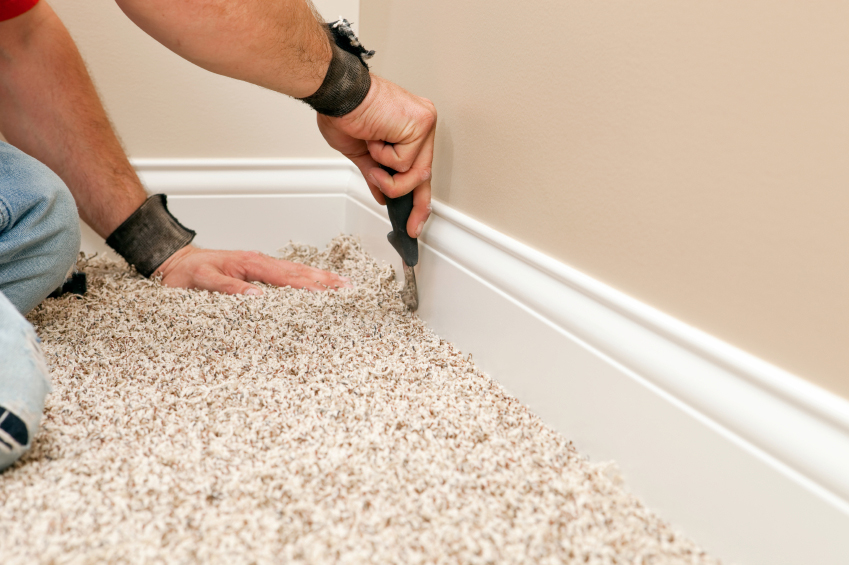
Fitting carpet in a home

Why opt for carpeting?

The first thing to think about is exactly why you want to cover your tiled floor with a carpet.

One good argument for doing so is that you want to give the room a new, revamped look but do not want the trouble and cost of lifting the old flooring. In that situation, there is no denying that choosing an attractive carpet will allow you to revitalise the space quickly and with a minimum amount of expense.

Another good reason for doing it is if you are renting the house or flat and you want the floor to be softer underfoot and warmer. Putting a carpet over the top of the existing tiles will enable you to achieve a warmer floor when you are not allowed to make permanent changes.

If and when you leave the property, the carpet can be lifted and taken with you to use in your new home. If you do rent rather than own the property, you will need to be especially careful not to cause damage to the tiles when putting down the carpet. This will be more difficult to achieve if you are not experienced at fitting floor surfaces.

Carpet tiles

Is any tiling suitable?

In principle, all types of tiling, from stone tiles to luxury vinyl tile (LVT) floors, are fine for putting carpet over. The only issue to be aware of is to do with the condition of the tiles rather than the sort of material they are made of.

It will not be a good idea to lay carpeting over tiles that are either faulty or broken. Look out for cracked tiles on the floor and use a pen to tap them to make sure none emit a hollow sound.

You should also check that none of the tiles on the floor are loose. If there are any issues of this sort, defective tiles should be taken out and the gaps filled in with some sort of cement or other filling material to make the floor level before any carpeting is put down.

The other situation where carpeting on top of tiled floors can be a problem is when the grouting between each tile is very deep and wide. That is most common in parts of the home like patios with sizeable tiles made of terracotta.

How is it done?

Fitting carpet on top of tiling is pretty similar to laying it over a cement floor. The carpet must be stretched across it and the smooth edging should ideally be glued down at the outermost part.

Then the carpet is further held in place by nails hammered into the tile grouting. These nails should go into the lines of grouting that lie closest to the walls on all sides of the room.

However, before the carpet officially gets laid down, it will be necessary to think about the underlay. This should be thick enough to conceal a slightly uneven tiled floor beneath.

Picking a carpet with a high density underlay of around 10mm will provide you the best results. Not only will it smooth out bumps in the floor below, but it will help to conceal the hard feel of the tiles and create a soft, gentle surface to walk on.

That can be particularly important if you live in a part of the country like Chester in the North West, which is prone to cold winters. However, if you want to get a really good finish and avoid lasting damage to the tiles, hiring a carpet fitter to do the job will be more sensible than trying to lay it yourself.

What sort of carpet is suitable?

A reasonably thick carpet will be a lot better than a thin one. The other feature to avoid is tightly looped piles, because these will accentuate any unevenness in the tiling beneath them.

The best carpet to pick will have a twist-style pile that will conceal such slight flaws in the flooring underneath.

In conclusion, you certainly can fit carpet over tiled floors, but it will be best to let a professional handle the job.

Experts say carpets have place in modern homes

Carpets have been featured in homes for centuries to add comfort and colour to rooms. There is, however, a growing trend for hard-surface floor, such as hardwood, vinyl and laminates. While some feel this means there is no longer a place for carpets, many interior design experts disagree.

According to experts, carpets can work with modern-style décor. In a report for Living etc, interior designer Vicente Wolf said:

“I’m a firm believer that spaces, especially bedrooms, should always utilize wall-to-wall carpeting.”

Wolf added that carpets add warmth and cosiness that increase the comfort of a room. Carpets also reduce sound levels.

Darren Jett of JETT Projects is also a fan of carpets, which, to him, add luxury and transforms a room. He believes that carpets remain in style.

Amy Leferink of Interior Impressions recommends carpets in neutral colours to create a soft cosy feel. She says carpets provide a plush atmosphere in intimate spaces such as dens and home libraries.

Some people don't want carpets because they mistakenly think they are difficult to clean and maintain. However, Jett recommends wool carpets that are treated with a sealer to make them stain resistant. Regular vacuuming takes little time and an annual deep clean by a professional carpet cleaner on a decent-quality carpet means that it will last a long time.

There is still a place for carpets in Chester and North Wales homes, but there has been a move away from bright patterns to more muted single colour carpets that suit modern décor styles.